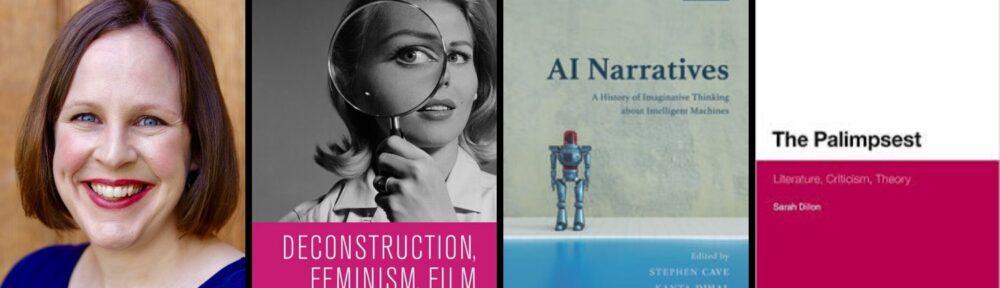
Literature and Science After Snow

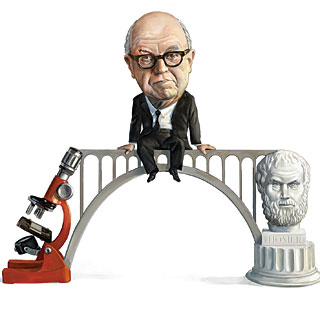
So my BBC Arts TV short film is now Live and can be found here. In it I talk about the relationship between literature and science since the mid-twentieth century. This date is marked not just by the end of the Second World War and the national and international changes that ensued, but also by another date – 1959 – when the English chemist and novelist C. P. Snow took to the podium in a packed Senate House at the University of Cambridge. There he stood and boldly delivered a lecture that was to change the face of the debate about the relationship between literature and science.
A13B2F53-2987-40D8-95C10F9533D9AA69

Snow believed that the intellectual life of Western societies was split into what he famously called ‘the two cultures’: the arts and humanities at one pole, the sciences at the other, an unbridgeable gulf between the two. Scientists, he said, don’t read; and literary types don’t have a clue about science, most of the ones  he knew couldn’t even explain something as scientifically fundamental as the Second Law of Thermodynamics.

So what did Snow want his lecture to do? Well he wanted it to provoke debate and he wanted it to spur people on to attempt to close the gap between the two cultures. Since Snow’s lecture, many intellectuals and scientists have risen to his challenge, working hard to prove that the divide between the two cultures is more imagined than real. Strangely enough, though, most scholars of literature and science have sought to prove Snow wrong not by looking forwards, but by looking back. They point to the nineteenth century as evidence of the intimacy between literature and science. Behold, they say, Darwin’s love of Milton, or Coleridge’s close friendship and collaboration with the visionary chemist Humphry Davy.

Yes, the nineteenth century was an era in which literature and science were common bedfellows. The title page of the very first issue of the journal Nature, published in 1869, in fact bears an epigraph from Wordsworth. And that epigraph remained there for nearly 100 years. But it was abandoned in 1963, only four years after Snow’s lecture. This timing is not coincidental. For the contemporary history of the relationship between literature and science is different to that of the nineteenth century. We need to look forward in response to Snow’s challenge, not look back.

And what do we see if we do indeed look beyond 1959? Well, we see a troubled relationship. Sometimes the two cultures are at war. Sometimes they are in love. In the 1990s, the famous science wars exploded in the States. Postmodern theorists argued for the equal value, even the fallibility, of all forms of knowledge. They challenged science’s claims to objectivity, authority and truth. And the scientists fought back, defending science from the perceived attack. Physicist Alan Sokal even went so far as to plant a hoax article in the journal Social Text supposedly to expose the lack of intellectual rigour of the new forms of cultural and literary theory and thought.

On the other hand, in the early years of the twenty-first century, we’ve seen moves towards reconciliation. In October 2011 the Royal Society held its One Culture festival, exploring the crosscurrents between literature and science; in 2013, the Barbican ran a season called ‘Wonder: Art and Science on the Brain’. Whilst the cultural theorists of the end of the twentieth century got into trouble because they argued for science’s similarity to other forms of knowledge, in an oddly similar spirit, though to different ends, the reconciliatory projects of the past twenty years also concentrate on what the two cultures share, be it a sense of wonder, or the crucial role imagination plays in both. But it is time to come out from under Snow’s shadow. Perhaps there is nothing inherently wrong with there being two cultures. Perhaps, in fact, we need to start valuing literature and science precisely for their differences, rather than continually attempting to bring them together. Science and literature offer us different ways of understanding the world, different routes to knowledge. And if we are to survive as a species, and retain our humanity, we are going to need to keep both.

Look Out, Here I Cam (bridge)

After an intense few months of move project management, with little time for anything else, the relocation to Cambridge is upon me and life can start to be filled up again with things other than estate agents, builders, painters, letting agents, removal companies, the list goes on. So yesterday I had the pleasure of spending the day filming with a great crew from the BBC making a short film as part of the New Generation Thinker experience. Check out last year’s films here. And yes, I did have to walk around looking thoughtful and take a book down off a shelf and pretend to be very interested in it. TV is a strange beast but it’s fascinating being part of a team creating in a medium where the images hold sway over the words. Very different to writing, and to radio. I’ll post a link to the NGT 2013 films when they find their way on to the BBC Arts page. In the meantime, there’s much more to come over the next few months, from a new blogging role for Sci-Fi-London, home of the UK’s main SF film festival, to a What Scientists Read event at the Edinburgh International Science Festival in April. Goodbye packing; hello world. It’s good to be back!

world_boxes

[Bad pun blog title courtesy of my husband.]

On the Move…

220px-Hellzapoppin_movie

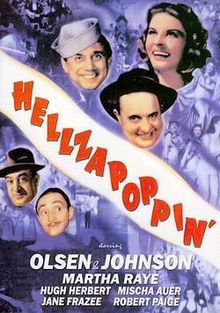
So the big news this month is that I’ve just been appointed to a University Lectureship in Literature and Film at the University of Cambridge. I’ll be heading down South to take up the post on 1st April 2014. I’m looking forward to embracing all things film and literature in the South East, as well as being within easy striking distance of the Big Smoke. One of my main responsibilities will be a special topic paper on Classical Hollywood – my favourite recent discovery is the startlingly postmodern 1941 musical Hellzapoppin’, loved by Lindy Hoppers the world over for its fantastic dance scene, but also laugh out loud funny and smartly self-reflexive about the Hollywood cinema of its time, in particular, and film in general. Well worth a watch over the festive period!


The Culture Studio…A Brave New World

149px-Aldous_Huxley imgres

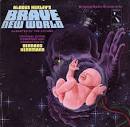
This Friday will be the 50th anniversary of the death of Aldous Huxley, the prolific writer best known for his dystopian vision of the future Brave New World. To honour the occasion I’ll be heading down to Edinburgh for my first visit to BBC Radio Scotland’s The Culture Studio. I’ll be chatting with Janice Forsyth about Huxley’s life and work – just how far are we now actually living in the world he imagined?

There’s an interesting connection here with Zamyatin’s We which I discussed last month at BBC Radio 3’s Free Thinking Festival. Huxley denied having read We before writing Brave New World but the similarities between the two tales are uncanny: the use of literature for state propaganda; the possibility of a space beyond the world of the controlled state; a final showdown with the man at the top; the threat the individual poses to an organised society. It’s hard to believe that We was not a source for Brave New World – George Orwell didn’t buy it; nor did Kurt Vonnegut, author of the fantastic Player Piano, who cheerfully admitted that he ripped off his plot from Brave New World which he had no doubts was equally ripped off from We. Lurking in the background here, as always of course, is H. G. Wells with his visions of future utopias and dystopias which have frightened and intrigued all subsequent speculative writers in equal parts.


Wombs on Legs?

Debate raged this summer about the all-male Arthur C. Clarke shortlist and the place of women writers in science fiction. That, along with the Texas abortion law changes, got me thinking about the feminist power of SF and what we can learn from it about women’s rights and how these are connected to our control of our own reproduction. That became the topic of my Free Thinking essay, which will be broadcast tonight on BBC Radio 3 at 10.45pm. As always, if you can’t listen live, it’ll be available on listen again here. Come with me on a late night journey on the Wombcraft to other imagined times and places. Enjoy the ride!

Free Thunk!

So, I am all Free Thunk! What a fantastic weekend in Gateshead with the BBC team and my fellow New Generation Thinkers. Speed dating was a heady, super-charged, intellectual comedy with the lovely Ian McMillan hooting the hooter in his own inimicable style. I came runner up each day with my idea that we should have a National Fool to keep us all honest! In slightly more serious proceedings, my discussion of Zamyatin’s dark dystopia We and the contemporary issues we are all facing around surveillance and questions of privacy, security and freedom was broadcast last night on BBC Radio 3. I was lucky enough to participate alongside a trio of the best in the business – David Aaronovitch, Sean O’Brien and Matthew Sweet. If you didn’t catch it last night, you can listen again here.

And here’s me trying to win over the love and votes of the Speed Dating public!

1377537_657410294280862_1458789981_n


‘Who’s in control?’: BBC Radio 3 Free Thinking Festival, 25th-27th October, The Sage, Gateshead

After a quiet, scholarly summer I’m reemerging to get going on some more public activities. First thing coming up is the fantastic annual BBC Radio 3 Free Thinking Festival at The Sage, Gateshead, 25th-27th October. This year’s theme is ‘Who’s in Control?’ and I’ll be sharing my thoughts at two gigs. On the Saturday, come along to my essay on reproduction and SF taking a tour of speculative fiction from Wells to Battlestar Gallactica. Then on Sunday I’ll be joining poet Sean O’Brien and journalist David Aaronovitch for a discussion of Zamyatin’s astonishing dystopian novel We. Tickets are free but need to be booked in advance here. All the sessions are recorded live and broadcast on BBC Radio 3 shortly after so if you can’t make it to Gateshead, stay tuned to Radio 3 instead!


BBC Radio 3 Night Waves Column on Analogy, Science and Literature

I was down in London yesterday to record my first column for BBC Radio 3 Night Waves. The science media is all a-buzz about ‘analogy’ at the moment after the publication of the new book by Pulitzer prize winning cognitive scientist Douglas Hofstadter and his collaborator, French psychologist Emmanuel Sander: Surface and Essences: Analogy as the Fuel and Fire of Thinking. They argue that rather than analogy just being a part of reasoning, it it actually the key to cognition – the only way we understand anything is by comparing it to something we already know. Interested by their arguments, I take a look at how analogy figures in literature and science and what is can tell us about the relationship between them. It’ll be broadcast sometime next week – I’ll post the link when it comes out, so watch this space.